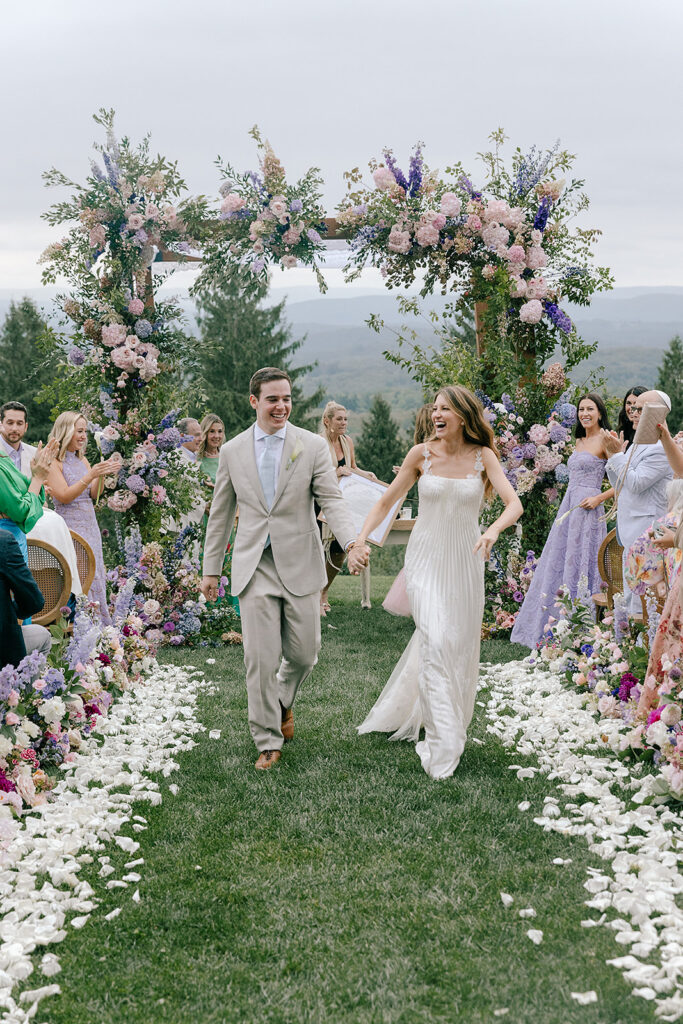






Jewish weddings are rich with symbolism, ritual, and intention. Each element of the ceremony from standing beneath the chuppah to breaking the glass carries layers of meaning that connect couples to generations before them, while still leaving space for personal expression and modern interpretation.
At their core, Jewish wedding traditions are not meant to feel rigid or prescriptive. Instead, they offer a framework through which couples can build a ceremony rooted in values, community, and shared responsibility, one that honors the past while reflecting the present.
The Jewish Wedding Ceremony, in Meaningful Moments
While the structure of a Jewish wedding ceremony may vary, its power lies in the way each ritual builds upon the next, weaving together commitment, joy, memory, and hope. What follows are some of the most significant traditions and the meaning they hold.
The Chuppah: Creating a Jewish Home
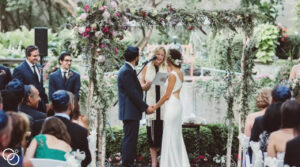
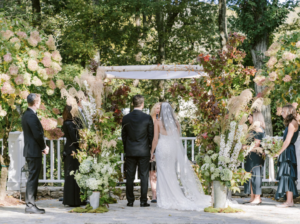
The chuppah, or wedding canopy, represents the couple’s first home together. Open on all sides, it symbolizes hospitality, openness, and the understanding that a Jewish home is rooted in community, welcome, and connection.
Some couples choose family heirloom chuppahs passed down through generations, while others create modern interpretations using meaningful fabrics, tallitot, or florals. While the materials may change, the symbolism remains constant; a shared commitment to building a home grounded in tradition, intention, and love.
The Ketubah: A Commitment in Writing
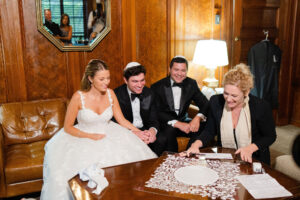
The ketubah is the Jewish marriage contract, outlining the couple’s responsibilities to one another and grounding the ceremony in intention and accountability. Traditionally written in Aramaic, many modern ketubot now incorporate egalitarian language, artistic expression, or bilingual text, allowing couples to reflect both tradition and personal values.
Beyond its legal origins, the ketubah is often displayed in the home as an expression of hiddur mitzvah, the beautification of a commandment, and as a daily reminder that marriage is built not only on love, but on shared values, mutual responsibility, and ongoing commitment.
Rings, Wine, and Blessings
Together, these ritual elements sanctify the marriage and emphasize both the joy and seriousness of the commitment being made.
Rings
In Jewish tradition, the wedding ring is typically simple and unbroken, symbolizing an unbroken bond. During the ceremony, the ring is placed on the right index finger while the ancient words of sanctification are spoken, marking the moment of marriage with clarity and intention.
Wine
Kiddush, the blessing over wine, occurs twice during the ceremony. It is first recited during Erusin, the engagement blessings, and again during Nisuin, the wedding blessings. Each time, wine symbolizes sanctification, joy, and the sweetness of a shared life.
The Seven Blessings (Sheva Brachot)
The Seven Blessings express gratitude for creation, joy, companionship, and peace. A beautiful setting is sung by the cantor and sometimes followed by English readings offered by honored friends or family. The Sheva Brachot emphasize that marriage is not only a private commitment, but one held and supported by community.
Breaking the Glass at a Jewish Wedding
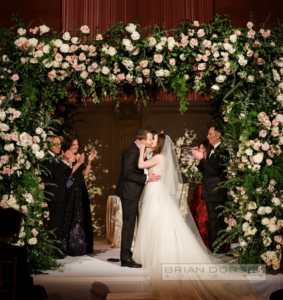
Breaking the glass is one of the most recognizable Jewish wedding traditions and one of the most emotionally powerful. It marks the conclusion of the ceremony and the joyful transition into celebration.
At its core, breaking the glass serves as a reminder that even in moments of great joy, we hold space for loss and humility. Traditionally, it recalls the destruction of the Temples in Jerusalem. In a contemporary context, it can also be understood as an acknowledgment of the brokenness in our world, paired with a commitment through the love of this newly formed marriage, to engage in tikkun olam, the ongoing work of repairing it.

Modern Interpretations of Jewish Wedding Traditions
In my work, I help couples personalize Jewish wedding traditions while maintaining their meaning and integrity. For many, this looks like honoring ritual while adapting it in ways that feel authentic to their lives and relationships.
Modern interpretations may include:
- Interfaith adaptations
- Sharing the breaking of the glass
- Personalized or egalitarian ketubah text
- Additional readings or blessings
- Creative keepsakes made from ceremonial objects
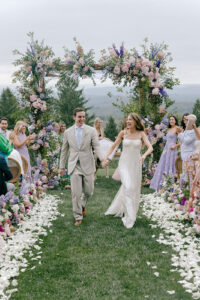
I have guided hundreds of couples through this process, helping them create weddings that feel fully grounded in Jewish tradition while still unmistakably their own. One such example is a vibrant celebration I planned that was featured in Style Me Pretty, where timeless ritual blended seamlessly with bold, modern design.
Learning More: Trusted Jewish Wedding Resources
Understanding Jewish wedding traditions can feel overwhelming at first, especially when many of these rituals are being encountered for the first time. Choosing the right officiant can open the door to the wisdom and beauty of the tradition, helping it feel not inherited, but chosen. Thoughtful clergy serve as guides, illuminating the ceremony’s symbols and language with care, and offering resources and perspective that honor both ancient ritual and the personal paths of the couple standing beneath the chuppah.
For many couples, trusted books are also a meaningful place to begin.
Frequently Asked Questions About Jewish Wedding Traditions
Are all Jewish wedding traditions required?. While certain rituals serve as the core elements of the ceremony, many traditions are flexible and can be adapted to reflect a couple’s values, beliefs, and circumstances.
Can Jewish wedding traditions be modernized?
Absolutely. Jewish tradition has always evolved, and contemporary interpretations are both common and deeply meaningful when approached with intention.
Do interfaith couples follow Jewish wedding traditions?
Many do. I gently and respectfully guide interfaith couples in incorporating Jewish traditions in ways that feel inclusive, intentional, and authentic to both partners.
Why These Traditions Still Matter
Jewish wedding traditions endure because they create meaning, continuity, and connection. They remind couples that marriage is not only about a single day, but about building a life rooted in intention, memory, and joy.
Whether a couple embraces every ritual in its most traditional form or chooses to personalize them, understanding the meaning behind these practices allows tradition to become something lived — not just observed.
Written by Shira Ginsburg, founder of Jewishly Ever After, a resource dedicated to Jewish weddings, traditions, and modern Jewish life.